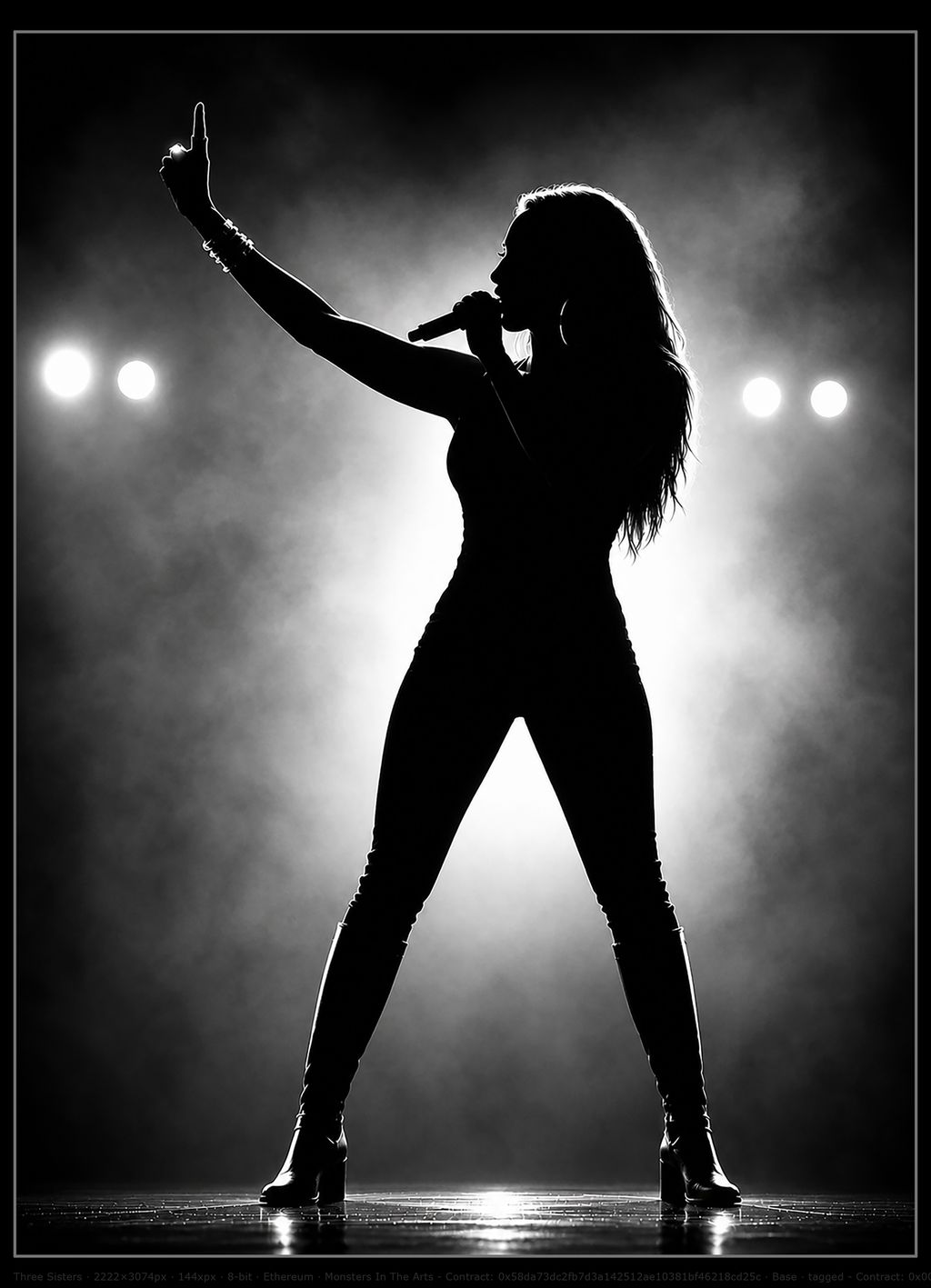
Three Sisters
Some songs are made for the dance floor.
Others escape the speakers, march into the streets, and become something much bigger than music.
Mary J. Blige's "Work That" did both.
That beat doesn't knock politely.
It kicks the fucking door open.
Funk in its bloodstream, hip-hop in its backbone, and enough swagger to tell every judgmental asshole in the room to find somebody else to bother.
Mary isn't asking permission.
She's delivering instructions.
Your hair. Your skin. Your body. Your history. Your scars.
Own every inch.
From the Bronx to Yonkers, from a homemade demo tape to the throne of Hip-Hop Soul, Mary had spent years turning heartbreak into music.
"Real Love" gave the streets a soul soundtrack. "My Life" exposed wounds the industry preferred hidden. "Not Gon' Cry" gave heartbreak its marching orders. "No More Drama" demanded an end to the emotional warfare.
Mary sang about addiction, betrayal, survival, self-respect, and the exhausting business of being a woman in a world forever offering unsolicited instructions.
Particularly a Black woman.
The music industry had its gatekeepers. Society had its prejudices. The haters had their microphones.
Mary had a bigger one.
And she knew how to use it.
By 2007, something had shifted.
Growing Pains wasn't the sound of a woman pretending the struggle was over. It was the sound of a woman refusing to let the struggle own her.
"Just Fine" celebrated the breakthrough.
"Work That" put boots on it.
A ferocious declaration of self-worth wrapped in an irresistible beat.
Apple carried it into millions of living rooms through an iPod silhouette commercial. A dancing figure, a pair of headphones, a blast of color, and Mary's voice reminding the world that individuality wasn't something to apologize for.
But the song had another life waiting.
Another woman would eventually walk into its rhythm.
Kamala Devi Harris.
Oakland, California.
The daughter of an Indian-born cancer researcher and a Jamaican-born economist, raised amid the civil rights movement and the belief that education, public service, and civic participation could change the country.
Howard University.
Political science. Economics. Alpha Kappa Alpha. Student government. Debate. Anti-apartheid activism.
Then UC Hastings College of the Law, where she led the Black Law Students Association.
The courtroom came next.
Alameda County prosecutor.
San Francisco District Attorney.
California Attorney General.
United States Senator.
Her record invited praise and criticism, as public service should. But her career was built across decades of legal responsibility, elections, and political scrutiny.
And the barriers she broke were unmistakable.
California's first woman Attorney General.
The second Black woman elected to the United States Senate.
Then, in 2020, the first woman, first Black American, and first South Asian American elected Vice President of the United States.
History was changing its seating arrangements.
And Mary J. Blige was providing the music.
Harris embraced "Work That" during her political rise, including her 2019 presidential campaign and the historic 2020 vice-presidential campaign.
The song accompanied her Democratic National Convention appearance.
November 7, 2020.
Wilmington, Delaware.
Kamala Harris, dressed in suffragette white, stood before the nation and spoke about generations of women who had struggled for political representation.
The daughter of immigrants had reached an office no woman had ever held.
Mary's music belonged to that moment.
The symbolism was delicious.
A woman who had spent her career singing about refusing to be diminished had become the soundtrack for another woman breaking through a ceiling reinforced by centuries of exclusion.
One sister made the anthem.
Another carried it into history.
Their connection wasn't merely musical.
Mary later recalled meeting Harris years earlier, during a difficult period in her own life. Harris had offered encouragement about confidence and self-love.
The politician had lifted the singer.
Now the singer's music was lifting the politician.
A circle of sisterhood.
A little human kindness traveling through time and returning as a thunderous beat.
But American history doesn't move in a straight line.
And neither does freedom.
Four years later, another presidential election arrived.
Joe Biden withdrew. Harris became the Democratic nominee in 2024, confronting the Orange Grifter in an extraordinarily compressed campaign.
The stakes had changed.
And so had the soundtrack.
Enter Beyonce.
Houston-born. Destiny's Child forged. Solo superstardom earned.
A woman who had built an empire around artistic control, Black identity, feminine power, and the right to define herself.
From "Independent Women" and "Survivor" to "Run the World (Girls)," Beyonce had spent decades turning female self-determination into popular music's common language.
Then came Lemonade.
2016.
An album confronting betrayal, inheritance, Black womanhood, cultural memory, and the complicated work of rebuilding what has been broken.
And at its heart, "Freedom."
Featuring Kendrick Lamar, the song carried the thunder of gospel, the weight of Black American history, and the urgency of a people unwilling to remain chained to the past.
Where Mary's "Work That" insisted that a woman own herself, Beyonce's "Freedom" demanded that the world recognize what that ownership means.
The right to move.
The right to speak.
The right to choose.
The right to exist without somebody else's fear becoming your prison.
Two songs, separated by nine years.
Two Black women, speaking different musical languages.
One escalating argument.
First, know your worth.
Then fight for your freedom.
July 2024.
Harris walked into her presidential campaign headquarters to Beyonce's "Freedom."
Beyonce personally authorized the campaign's use of the song.
The anthem became inseparable from Harris's presidential run, accompanying campaign appearances and advertisements.
It was more than celebrity background music.
"Freedom" had emerged from a record deeply connected to Black cultural history and the struggle against racial injustice.
Now it accompanied a Black and South Asian American woman seeking the presidency of the United States.
The symbolism wasn't subtle.
Nor should it have been.
October 25, 2024.
Houston, Texas.
Beyonce returned to her hometown alongside fellow Destiny's Child powerhouse Kelly Rowland to introduce Harris at a rally centered on reproductive freedom.
Beyonce spoke as a mother concerned about the world her children would inherit.
Kelly stood beside her.
Kamala took the stage.
Three women, different careers, different instruments, united around the question of who gets to control a woman's future.
Beyonce did not perform that night.
She didn't need to.
Her music had already become part of the campaign's bloodstream.
Mary J. Blige supplied the swagger of self-respect.
Beyonce supplied the battle cry.
Kamala Harris carried both into the political arena.
WORK THAT.
FREEDOM.
The progression was almost too perfect.
But America was about to demonstrate just how much unfinished business remained.
On one side stood Kamala Harris, a woman who had spent more than three decades working her way through the American legal and political system.
On the other stood the Gold-Plated Fraud.
The racist birther. The convicted felon. The conman who somehow turned American grievance into a personal business model.
A man whose business career included bankrupt casinos, a fraudulent university settlement, and a civil fraud judgment.
A man found liable for sexually abusing and defaming E. Jean Carroll.
A man convicted of 34 felony counts of falsifying business records.
A man who launched his first presidential campaign by vilifying Mexican immigrants, demanded a ban on Muslims entering the country, and spent years spreading the racist lie that America's first Black president wasn't really American.
The same man who told four congresswomen of color to go back where they came from.
The same man who promoted the lie that Haitian immigrants in Springfield, Ohio, were eating people's pets.
The same man who spent years turning immigrants, minorities, and political opponents into convenient targets for American anger.
A racist demagogue with a grifter's instincts and a conman's relationship with the truth.
And somehow, in 2024, millions of Americans looked at that record and decided he deserved another four years in the White House.
There were legitimate debates to be had about inflation, immigration, foreign policy, and the Biden administration's performance.
There always are.
But the election also exposed an uglier American reality.
For too many voters, a qualified Black woman was apparently more difficult to accept than a white man carrying a mountain of scandals, convictions, and documented dishonesty.
The old racial and gender hierarchies had not vanished.
They had simply learned to wear modern campaign merchandise.
And the fear merchants were still doing business.
Tell people that immigrants are stealing their jobs.
Tell them that minorities are getting special treatment.
Tell them that feminists are destroying their families.
Tell them that somebody different is coming for their children, their neighborhoods, their safety, their country.
Keep the public frightened enough and the grift practically runs itself.
The boogeyman changes costumes.
The hustle remains the same.
And prejudice is especially useful to politicians who need somebody else to blame.
America handed the White House back to a racist conman who had already shown the country exactly who he was.
Harris lost.
The presidency remained a ceiling no American woman had yet broken.
And the country that had elected its first Black president sixteen years earlier returned to the man who had spent years questioning that president's legitimacy.
That is one hell of an American contradiction.
But losing an election does not erase the history made along the way.
Nor does winning an election make a conman's lies true.
The fight for civil rights was never going to be settled by one election, one candidate, or one generation.
The work continues.
That stubborn truth runs through all three women's stories.
Mary's songs never promised a painless life.
Beyonce's "Freedom" never promised liberation without struggle.
And Harris's political journey never promised that progress would be permanent.
What connects them is not the fantasy of an easy victory.
It is the refusal to surrender the right to try.
Mary turned pain into power.
Beyonce turned power into a demand for freedom.
Harris carried that demand into a presidential campaign, standing on a road built by generations of women who had been told to wait their turn.
Sojourner Truth.
Harriet Tubman.
Ida B. Wells.
Shirley Chisholm.
Barbara Jordan.
Fannie Lou Hamer.
Women who challenged slavery, segregation, exclusion, and the comfortable American habit of calling inequality tradition.
Women who didn't wait for permission.
And beyond the famous names, millions of mothers, daughters, workers, organizers, teachers, voters, and unnamed sisters who kept pushing the country toward the promises written into its founding ideals.
Their work was never finished.
Neither is ours.
The next generation will inherit the unfinished fight against racism, misogyny, manufactured fear, and the profitable business of turning Americans against one another.
Perhaps one day enough Americans will recognize that the stranger they've been taught to fear is not the person stealing their future.
And that the loudest man shouting about enemies is sometimes the one reaching into their pockets.
The boogeyman was never coming for their stuff.
The grifter was already picking their pockets.
The answer will not come from a song alone.
Or from a politician alone.
It will come from people who refuse to stop showing up.
Somewhere in that future, another young woman will hear Mary's beat.
Another will hear Beyonce's thunder.
Another will decide that the ceiling above her head is not a law of nature.
And perhaps one day the country will stop treating a woman's ambition as a threat and start recognizing it as part of the American promise.
Until then, turn it up.
For the women who built the road.
For the women who walked it.
For the women still coming.
Mary J. Blige gave them the swagger.
Beyonce gave them the battle cry.
Kamala Harris gave both songs another chapter in American history.
One woman knows her worth.
Another demands her freedom.
A third reaches for the highest office in the land.
Three sisters.
Two anthems.
One unfinished American promise.
WORK THAT.
FREEDOM.
AND DON'T YOU DARE STOP.