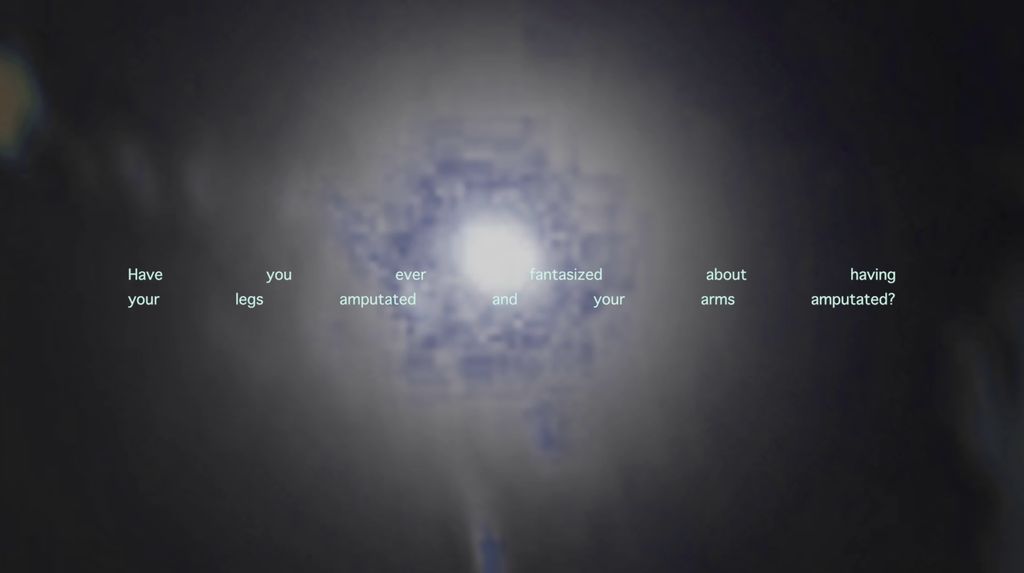
Single-channel digital video,
10:10 min, 4K, color, sound, 16:9,
Sound collaboration: Marcos Parajua (artist and researcher)
Madrid, Spain. 2025
This NFT verifies ownership of the full artwork.
A full version of the artwork, 10:10-minute 4K single-channel video, will be provided to the collector.
The artist will retain a copy of the work for exhibition purposes and will not be entitled to sell it.
This video is part of the d/wb project.
The d/wb (desert/wet box) project, developed over a year across Madrid, London, and SF, CA, constitutes a sustained inquiry into the entangled domains of artificial intelligence, cybernetics, semiotics, and technological mediation. Composed of three interrelated works — the wet box, third extension, and fieldware — ,it functions as an experimental probe into the processes by which signs are produced, abstracted, and ultimately activated as vectors of value. Abstraction here is not treated as a secondary gesture of simplification, but as an active operative force that sustains both technocultural imaginaries and contemporary economies. Through this framework, d/wb positions itself within debates on Web3, tokenization, and the infrastructural dynamics of semiotic capitalism.
the wet box is recursion that fails: the object — solid, geometric — cannot be defined, and the body conforms to exteriorities, wrapped, faces wrapped. It is a cyberspace cut like a spiral, an incomplete turn, a fracture of language that opens onto possibility. As the initiating articulation of the cycle, the work stages technology as part of feedback systems that constitute cognition — the mapping of environment, the shape of value, the shape of morality. It reconstructs the pointing finger, the speaking gesture, the hole that looks. The piece grapples with the virtuality of the body that abstracts itself, the sign incapable of defining itself, the language that is performed, the fragments of an abstract machine.
As a recursive linguistic exploration of objects in the digital context, the wet box operates as a practical essay on the cybernetic performativity of artificial intelligence and its capacity to constitute ecologies and economies — corporealities, territories, value, and morality — by acting on cognition and space. In this sense, language and its models emerge as technologies that escape the object. Built from noise and low quality, the work leans toward cybernetic abstraction and non-representationality, leveraging AI to manipulate image, text, and sound, appealing to the viewer while remaining firmly in the realm of abstraction.