THE SISTERS
NO TRIBE OWNS THE FIRE
Power To The People — October 3, 2026
Merriweather Post Pavilion, Columbia, Maryland
They came from different generations, different musical worlds, and different chapters of the long, unfinished struggle for equality.
Some carried guitars.
Some carried microphones.
One carried drumsticks.
Some carried voices powerful enough to make an entire stage sound like a congregation.
And one carried more than sixty years of American protest history in her bones.
At Power To The People, the women weren't there to decorate a revolution organized by men.
They were part of the revolution.
Punk rock. Hard rock. Soul. Blues. Gospel. Folk. Heavy metal. The furious energy of youth and the extraordinary authority of experience.
No single sound. No single generation. No approved uniform for resistance.
From The Linda Lindas to Taylor Momsen to Joan Baez, the sisters represented something larger than a collection of individual performances.
They were living evidence that the fight for equality, dignity, freedom, and the right to be heard has never belonged to one gender, one generation, or one musical tribe.
And they weren't asking for permission.
THE GIRLS WITH THE GUITARS
Start with The Linda Lindas.
Young. Loud. Unapologetic.
A punk band arriving at a festival populated by musicians who helped write the history of rebellion long before these young women were born.
But the beautiful thing about punk is that its authority doesn't come from seniority.
It comes from attitude.
From refusing to accept that somebody else gets to decide what you can say, how you should look, or how much noise you're allowed to make.
The Linda Lindas weren't there to play the part of adorable young musicians standing beside famous grown-ups.
They were there as a band.
Their own instruments. Their own voices. Their own place in the argument.
And that distinction matters.
For generations, women in rock were expected to be the singers, the girlfriends, the muses, the beautiful faces on the album covers.
The men were supposed to own the guitars, the amplifiers, the distortion, and the mythology.
That arrangement was always bullshit.
Women had been breaking it for decades.
And here came another generation to break it again.
The Linda Lindas didn't need to invent rebellion.
They simply refused to let anyone retire it.
THE WOMAN WHO WALKED INTO SOUNDGARDEN
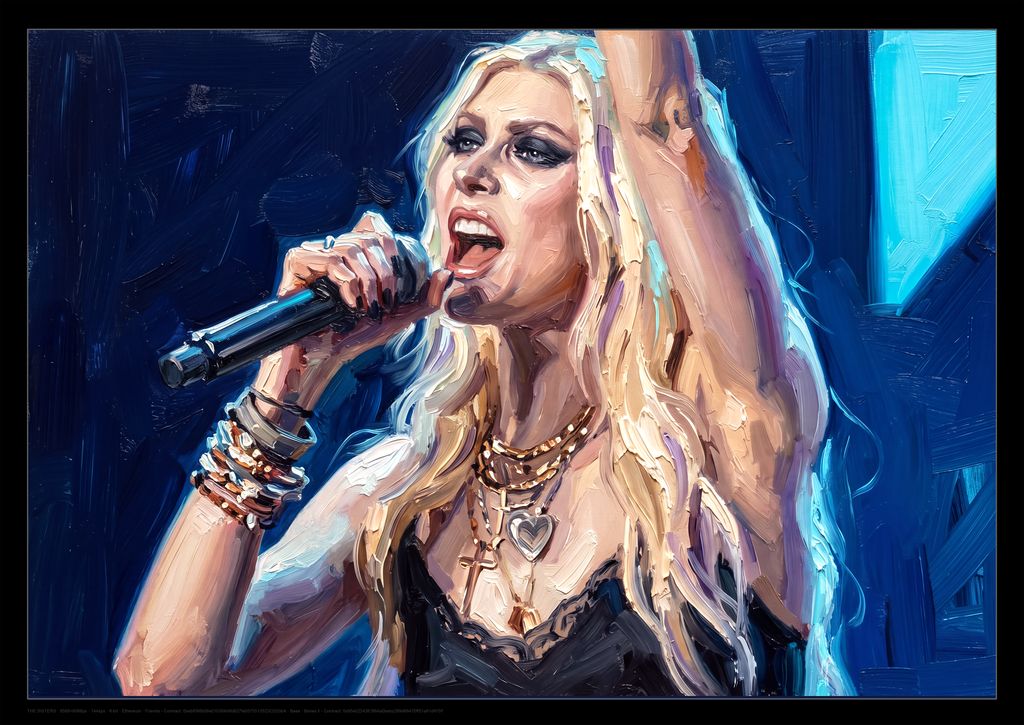
Then Taylor Momsen stepped into one of the most emotionally loaded spaces in modern rock.
Suns of Soundgarden.
Matt Cameron behind the drums. Mike McCready on guitar. Robbie Mangano on bass. Tom Morello adding another electric current.
And Momsen at the microphone.
“Loud Love.”
“Outshined.”
“Spoonman.”
Songs carrying the enormous shadow of Chris Cornell, a singer whose voice helped define an era and whose absence remains painfully real.
There was no replacing Cornell.
That wasn't the assignment.
Momsen brought something more interesting than imitation.
Her own voice.
Her own authority.
Her own hard-rock fire.
A woman standing at the front of music historically associated with one of rock's most extraordinary male vocalists, refusing to let reverence become paralysis.
The songs were alive because somebody was willing to sing them.
And because the musicians around her understood that honoring the past doesn't mean embalming it.
There was something wonderfully defiant about the image.
Blonde hair. Rock-and-roll attitude. A microphone. A band loaded with Seattle musical history.
And a woman commanding the center of it.
Not a substitute.
Not a novelty.
A rocker.
Period.
THE DRUMMER WHO DIDN'T NEED A PERMISSION SLIP
Then there was Yoyoka Soma.
Behind the drums for Jack Sabbath, surrounded by a temporary heavy-metal family that included Jack Black, Roman Morello, Revel Ian, and Hugo Weiss.
The music was Black Sabbath and Ozzy Osbourne.
Heavy riffs. Dark mythology. Thunderous rhythms.
And then Geezer Butler joined them for “War Pigs.”
An original architect of heavy metal standing alongside a new generation of musicians, including a young woman driving the music from behind the kit.
Consider the history.
Heavy metal spent decades cultivating an image of masculine aggression: leather, volume, power, danger, and an endless procession of men posing with guitars.
Women were there, of course.
Playing. Singing. Writing. Fighting for room.
But the mythology often pushed them to the margins.
Yoyoka didn't need to deliver a speech about any of that.
She had drumsticks.
And the drums were speaking.
“War Pigs” was already a condemnation of politicians who send other people's children into war.
At this festival, the song acquired another dimension.
A young woman helping carry the thunder of an older generation's protest music into the future.
The original warning was still alive.
So was the power to play it.
BRITTANY HOWARD — NO GENRE CAN HOLD HER
Brittany Howard brought a different kind of electricity.
A voice capable of moving between soul, blues, rock, gospel, and American roots music without asking where one category ends and another begins.
Howard doesn't need a wall of distortion to make a statement.
She can make vulnerability sound enormous.
She can make pain sound confrontational.
She can turn a melody into something that feels both deeply personal and unmistakably communal.
And that matters at a festival dedicated to political resistance.
Because protest isn't only rage.
Sometimes it's grief.
Sometimes it's survival.
Sometimes it's the insistence that joy, love, dignity, and individual humanity are worth defending.
The history of American protest music runs straight through Black musical traditions — spirituals, gospel, blues, soul, and the countless voices that transformed private suffering into public testimony.
Howard stands inside that vast musical inheritance while refusing to be confined by it.
Rock isn't one thing.
Neither is resistance.
And neither is a woman with something to say.
THE VOICES THAT HELD THE WHOLE DAMN THING TOGETHER
Not every sister stood alone beneath a spotlight.
Some worked inside the enormous musical machinery that made this festival possible.
Cindy Mizelle joined Dave Matthews for Marvin Gaye's “Mercy Mercy Me (The Ecology).”
A song from 1971.
A warning about pollution, poisoned air, damaged oceans, and humanity's casual destruction of the natural world.
More than half a century later, its questions remained painfully relevant.
And Mizelle's voice helped bring that history into the afternoon.
Then there were the additional women singing with Tom Morello and the Freedom Fighter Orchestra.
The backing vocalists.
The guest singers.
The ensemble voices.
And the gospel singers surrounding Killer Mike's performance.
These were not decorative musical accessories.
They were part of the sound.
Part of the architecture.
Part of the emotional machinery that allowed the festival to move from punk fury to political rap, from heavy metal to gospel, from individual confrontation to collective release.
A guitar can deliver an accusation.
A rapper can deliver an argument.
But when a chorus of voices rises behind them, something changes.
The statement becomes communal.
One person saying no becomes a roomful of people saying it together.
And gospel carries a particularly powerful historical resonance.
For generations, Black churches and their musical traditions helped sustain movements for civil rights and social change.
The music offered more than inspiration.
It offered endurance.
A way to transform fear into courage, exhaustion into collective strength, and individual voices into something larger than themselves.
That history was never far away from the sound of this festival.
The famous names drew the headlines.
But the women working inside the ensembles helped give the music its muscle, its humanity, and its enormous emotional reach.
Not every one of those performers has been individually identified in our appearance ledger.
That doesn't make their contribution invisible.
It makes the larger sisterhood worth acknowledging.
JOAN BAEZ — SIX DECADES AND STILL NOT FINISHED
And then there was Joan Baez.
Silver-white hair.
An unmistakable voice.
A lifetime of refusing to confuse silence with peace.
Baez didn't need to arrive carrying the mythology of the 1960s.
She lived it.
Civil rights.
The antiwar movement.
Nonviolent resistance.
The long and often dangerous American struggle to make the country's promises mean something beyond the words printed on paper.
She had sung when singing could carry serious personal and political consequences.
She had marched.
She had stood beside people who were risking far more than their careers.
And more than sixty years later, she was still standing.
Still singing.
Still refusing to accept that the work was finished.
Her festival appearances reached deep into the American protest-song tradition.
“Deportee (Plane Wreck at Los Gatos).”
“Ain't Gonna Let Nobody Turn Me 'Round.”
“Chimes of Freedom.”
“This Land Is Your Land.”
“Power to the People.”
These weren't simply old songs brought out for a nostalgic afternoon.
They were unfinished arguments.
Woody Guthrie's “Deportee” confronted the dehumanization of migrant workers, whose names were erased from the public account of a fatal plane crash.
“Ain't Gonna Let Nobody Turn Me 'Round” carried the determination of the civil-rights movement.
Bob Dylan's “Chimes of Freedom” imagined freedom ringing for the excluded, the forgotten, the imprisoned, and the dispossessed.
And Guthrie's “This Land Is Your Land” asked who truly belongs to the land that politicians so casually claim to own.
None of those questions had disappeared.
Baez stood at the far end of a generational spectrum that included young women who had inherited a world transformed by the struggles of her generation.
Transformed.
Not perfected.
And there was the central contradiction of the entire festival.
So much had changed.
So much had not.
FROM THE LINDA LINDAS TO JOAN BAEZ
Think about the distance between those stages of life.
The Linda Lindas belong to a generation raised with the internet, social media, streaming music, and political arguments that can circle the planet in seconds.
Joan Baez began her career in an America where television was still becoming a dominant cultural force, segregation was enforced by law across much of the South, and the civil-rights movement was fighting battles that would reshape the country.
Taylor Momsen emerged from a world shaped by decades of rock history.
Brittany Howard carries musical traditions reaching back through the deepest roots of American popular culture.
Yoyoka Soma represents a new generation capable of discovering, studying, and mastering musical history that predates their own births by half a century.
Cindy Mizelle and the festival's supporting vocalists helped connect those worlds through the power of collective singing.
Different histories.
Different sounds.
Different routes to the same stage.
And not one of them required the women to sound alike, look alike, or agree on some approved definition of femininity.
That's the point.
There is no single way to be a woman in music.
No single way to be a rebel.
No single way to confront power.
A punk guitarist and a folk singer can belong to the same struggle.
A gospel vocalist and a heavy-metal drummer can contribute to the same argument.
A soul singer and a hard-rock frontwoman can make different kinds of noise while challenging the same old assumption that women should occupy less space.
The sisters weren't a genre.
They were a force.
THE STAGE BELONGS TO EVERYBODY
Power To The People was built around a simple proposition.
No tribe owns resistance.
Not rock.
Not hip-hop.
Not punk.
Not folk.
Not men.
Not women.
Not the old.
Not the young.
And certainly not the people who believe power entitles them to silence everybody else.
The women on this stage demonstrated that principle without needing to become a separate festival inside the festival.
They were woven through the entire thing.
At the front of bands.
Behind drum kits.
Inside vocal ensembles.
Carrying old songs.
Reinventing familiar ones.
Bringing new energy to traditions that would die if nobody bothered to challenge them.
And when the closing performances gathered more and more musicians onto the stage, the distinction between individual star and collective movement began to dissolve.
Joan Baez was there.
The old protest songs were there.
The voices of another generation were there.
And the audience became part of the chorus.
The festival didn't end with a woman standing alone, asking the world to listen.
It ended with a crowd of people singing words that had survived generations of struggle.
There is something beautifully appropriate about that.
Because the history of women in protest music has never been only the story of extraordinary individual stars.
It's also the story of thousands of voices.
Women singing in churches.
Women marching through streets.
Women organizing communities.
Women playing instruments in clubs where nobody expected them.
Women writing songs that powerful people would rather not hear.
Women refusing to disappear.
The Linda Lindas didn't have to become Joan Baez.
Taylor Momsen didn't have to become Brittany Howard.
Yoyoka didn't have to become anybody but herself.
And Joan Baez didn't have to surrender the stage to prove that the next generation had arrived.
They could all be there.
Together.
The sisters didn't ask who owned the revolution.
They showed up and made it louder.
No tribe owns the fire.
And no one gets to tell these women how brightly they're allowed to burn.
6° PING — THE SISTERHOOD CONNECTIONS
-The Linda Lindas → Punk Rock → Women's Liberation → Joan Baez
Different musical eras, connected by the refusal to accept prescribed roles. The folk-protest tradition and punk rebellion share a central belief: ordinary people have the right to challenge authority.
-Taylor Momsen → Soundgarden → Chris Cornell → Audioslave → Tom Morello
Momsen carried Soundgarden's songs into the festival with musicians connected to its history. Cornell's later work with Morello in Audioslave created another direct bridge between the day's musical worlds.
-Yoyoka Soma → Jack Sabbath → Geezer Butler → Black Sabbath → “War Pigs”
A young drummer sharing the stage with an original heavy-metal pioneer while performing a song whose antiwar message remained relevant fifty-six years after its release.
-Brittany Howard → Blues → Gospel → Soul → Civil Rights
A musical family tree reaching through African American traditions that shaped American popular music and helped provide the emotional vocabulary of political resistance.
-Cindy Mizelle → Marvin Gaye → “Mercy Mercy Me” → Environmental Protest → Dave Matthews
A contemporary performance of a 1971 environmental warning, connecting classic soul, a veteran backing vocalist, and the festival's larger political concerns.
-Joan Baez → Woody Guthrie → Bob Dylan → Bruce Springsteen
An extraordinary chain of American protest music, brought together through songs addressing immigration, civil rights, war, inequality, and freedom.
-The Linda Lindas → Taylor Momsen → Brittany Howard → Joan Baez
Not a literal collaboration chain, but a living musical spectrum: punk, hard rock, soul, and folk resistance sharing one festival and one unfinished argument.
BREADCRUMBS — BONES FOR THE ARCHIVE
-1948: A plane crash near Los Gatos, California, kills 32 people, including 28 Mexican agricultural workers. Woody Guthrie writes the words to “Deportee,” condemning the anonymity imposed on the migrant victims.
-1959: Joan Baez performs at the Newport Folk Festival, helping launch a career that becomes inseparable from American civil-rights and antiwar activism.
-1960s: “Ain't Gonna Let Nobody Turn Me 'Round” becomes an enduring freedom song of the civil-rights movement, adapted from an earlier spiritual tradition.
-1964: Bob Dylan releases “Chimes of Freedom,” a sweeping anthem of compassion for people pushed to society's margins.
-1970: Black Sabbath releases “War Pigs.” Fifty-six years later, Geezer Butler joins Jack Sabbath's younger musicians for the song at Power To The People.
-1971: Marvin Gaye releases “Mercy Mercy Me (The Ecology)” on What's Going On. Cindy Mizelle joins Dave Matthews in revisiting its environmental warning at the festival.
-1990s: Soundgarden becomes one of the defining bands of Seattle's rock explosion. Its musical legacy returns through Suns of Soundgarden, fronted by Taylor Momsen.
-2026: The Linda Lindas, Taylor Momsen, Brittany Howard, Yoyoka Soma, Cindy Mizelle, Joan Baez, and additional women across the festival's backing bands and vocal ensembles represent a remarkable span of musical generations.
-2026: The Freedom Fighter Orchestra and Killer Mike's supporting musicians and gospel singers help transform individual performances into a larger collective sound.
-October 3, 2026: Joan Baez joins the festival's closing sequence, connecting the protest traditions of Guthrie and Dylan with Springsteen, Morello, and a multigenerational stage.
THE SISTERHOOD THESIS:
They weren't the women of Power To The People because they shared a gender.
They were the women of Power To The People because each brought her own voice, her own instrument, her own history, and her own refusal to be silent.
From young punk rebels to a living legend of the civil-rights movement, they demonstrated that the fight for freedom doesn't belong to any one generation.
And neither does the stage.
NO TRIBE OWNS THE FIRE.