About
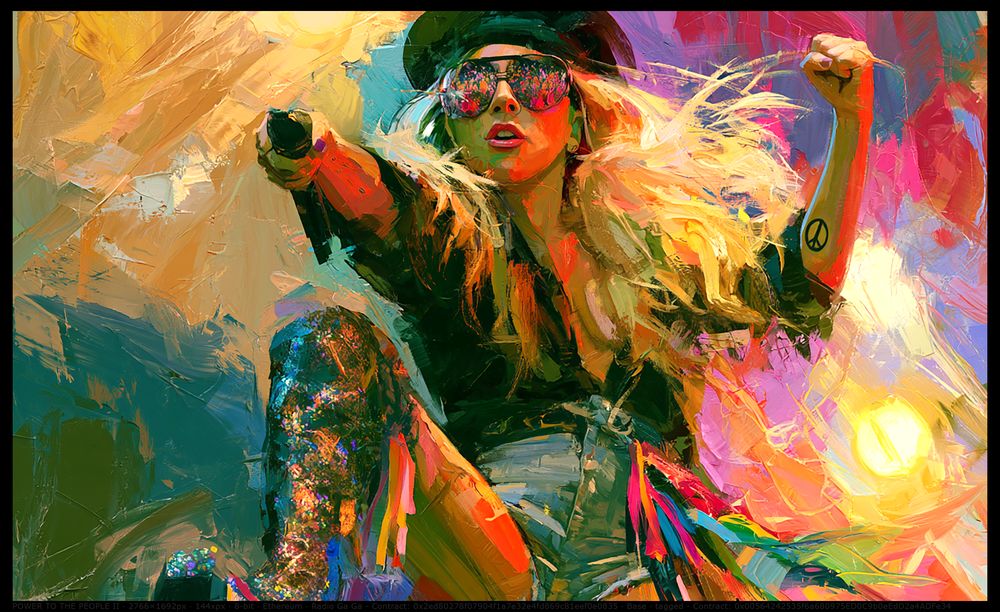
POWER TO THE PEOPLE — BOOM!
For ten hours, October 3 kept asking questions.
Who owns America?
Who gets heard?
Who gets blamed?
Who works?
Who gets rich?
Who gets protected?
Who gets deported?
Who gets sent to war?
Who gets to call themselves a patriot?
Who gets written out of the song?
By the end, Power to the People stopped asking.
It answered.
Everybody.
—
Tom Morello had spent the day building something that barely qualified as a concert anymore.
Joan Baez.
Bruce Springsteen.
Public Enemy.
Foo Fighters.
Dave Matthews.
Killer Mike.
Cypress Hill.
Dropkick Murphys.
Geezer Butler.
Serj Tankian.
DMC.
Stephen Stills.
Brittany Howard.
The Linda Lindas.
grandson.
Taylor Momsen.
Matt Cameron.
Mike McCready.
Nathaniel Rateliff.
Jack Black.
Young musicians.
Old musicians.
Rappers.
Punks.
Metalheads.
Workers.
Activists.
A police officer who defended the Capitol.
People who could physically reach Maryland.
People who couldn't and appeared on a screen.
Some came for full sets.
Some for one song.
Some for a few words.
Some walked on, blew the place apart for five minutes and disappeared.
No single person owned the day.
Not even Morello.
That was the design.
—
The oldest political ghosts had arrived first.
Woody Guthrie.
Bob Dylan.
Mose Allison.
Stephen Stills.
Creedence Clearwater Revival.
Black Sabbath.
The Temptations.
Marvin Gaye.
John Lennon.
The Clash.
Neil Young.
Public Enemy.
Rage Against the Machine.
Some writers were dead.
Some were absent.
Some were standing right there.
Their songs had survived because the problems inside them had survived.
That's the uncomfortable miracle of protest music.
We celebrate its longevity.
Maybe we shouldn't.
A seventy-year-old love song surviving is beautiful.
A seventy-year-old warning surviving can mean we still haven't fixed the fucking thing.
—
October 3 understood that.
It didn't put the old songs behind glass.
It fucked with them.
Public Enemy took “Ball of Confusion” and pushed 1970 toward 2026.
Foo Fighters opened up the language of “Young Man Blues.”
Dave Matthews pulled “Rockin' in the Free World” toward school shootings and contemporary environmental absurdity.
grandson grabbed Dylan.
Dropkick Murphys reconsidered an old Irish political song against a new American moment.
grandson and DMC climbed inside Woody Guthrie.
The festival wasn't preserving history.
It was arguing with it.
—
That argument crossed generations.
Joan Baez didn't hand the movement to Springsteen.
Springsteen didn't hand it to Morello.
Morello didn't hand it to grandson.
That's too neat.
History doesn't move like a relay race.
Everybody was holding pieces simultaneously.
Baez could still sing.
Stills could still deliver his own warning sixty years later.
Geezer Butler could walk into War Pigs.
Chuck D could still say Fight the Power himself.
DMC could still explode into a Morello set.
The elders weren't ceremonial.
The younger artists weren't apprentices.
They were coworkers.
—
And they didn't sound alike.
That matters.
The fantasy version of political unity usually requires everybody to agree about everything.
Real coalitions don't work that way.
Killer Mike did not sound like Joan Baez.
Baez did not sound like Cypress Hill.
Cypress Hill did not sound like Sabbath.
Sabbath did not sound like Public Enemy.
Public Enemy did not sound like Dropkick Murphys.
Dropkick didn't sound like Dave Matthews.
Dave Matthews sure as hell didn't sound like Rage Against the Machine.
Good.
No tribe owns resistance.
October 3 didn't erase difference.
It weaponized the overlap.
—
The overlap was simple enough.
Racism is poison.
Fascism is dangerous.
Workers matter.
Immigrants are human beings.
War has a class system.
Billionaires and oligarchs should not own democracy.
Voting matters.
History matters.
Art matters.
People unlike you matter.
And sometimes the appropriate response to power is:
Fuck you, I won't do what you tell me.
Other times it's:
register to vote.
Those ideas can occupy the same fucking day.
—
That may have been Mary Morello's contribution to the entire architecture.
Fight fascism every way you can.
Not one way.
Every way.
The ballot.
The union.
The protest.
The courtroom.
The classroom.
The song.
The joke.
The obscene lyric.
The old folk chorus.
The young rapper.
The cop who refuses the mob.
The artist who refuses silence.
The person who stands beside somebody being targeted even when the target belongs to another tribe.
Democracy is messy because people are messy.
October 3 sounded appropriately messy.
—
And it was fun.
That cannot become a footnote.
There were giant hooks.
Ridiculous costumes.
Jack Black playing Sabbath.
Cypress Hill detonating “Jump Around.”
Dave Grohl being Dave Grohl.
Thousands of people screaming familiar choruses.
Musicians wandering into other people's sets.
Guitars everywhere.
Laughter.
Noise.
Joy.
A protest movement that offers nothing except anger eventually becomes another prison.
The point of resisting miserable people who want to control everybody isn't to become more miserable than they are.
The point is to defend the possibility of a life worth living.
Music.
Love.
Friends.
Sex.
Art.
Dancing.
Stupid jokes.
Beautiful noise.
Joy is part of the fucking platform.
—
Then came the final forty minutes.
Springsteen alone.
“Streets of Minneapolis.”
The crowd:
ICE OUT NOW.
Baez.
“Chimes of Freedom.”
Morello and the Freedom Fighter Orchestra.
Springsteen plugs in.
“Clampdown.”
“The Ghost of Tom Joad.”
Matthews and Rateliff.
“Fortunate Son.”
Grohl.
“Rockin' in the Free World.”
The stage grows.
The history grows.
The noise grows.
And then the day's organizing principle finally becomes visible:
Everybody get back out here.
—
They came.
The separate sets disappeared.
The genres disappeared.
The hierarchy blurred.
And an enormous collection of human beings began singing:
“This Land Is Your Land.”
Woody Guthrie.
1940
But not the harmless schoolbook Guthrie.
The uncomfortable parts were acknowledged.
The censorship.
The land.
The fences.
The people excluded.
Indigenous dispossession.
Wealth.
Oligarchy.
Who actually owns this place?
Then the song started moving through people.
Bruce.
Baez.
Matthews.
grandson.
DMC.
Morello.
Old words.
New words.
Old people.
Young people.
A folk song became a public square.
And thousands knew the chorus.
—
Then there was nowhere else to go.
The festival had used nearly every language it possessed.
Folk.
Soul.
Rock.
Punk.
Metal.
Hip-hop.
Gospel.
Political theater.
Speeches.
History.
Profanity.
Humor.
Grief.
Anger.
Joy.
So the final statement became almost primitive.
Three words.
Power to the People.
John Lennon wrote them in 1971.
In 2026 they were the name on the festival.
Then they became the final song.
Then everybody sang them.
That's the Big Boom.
Not fireworks.
Not a guitar solo.
Not Springsteen.
Not Morello.
Not Public Enemy.
Not Lennon.
Everybody.
The entire structure collapsed into the title.
POWER TO THE PEOPLE.
—
There is a trap hiding inside political concerts.
Famous people can sing about changing the world.
Everybody cheers.
Everybody buys a shirt.
Everybody goes home.
Nothing changes.
October 3 knew the trap.
That's why voting kept appearing.
That's why organizers were there.
That's why workers entered the stage.
That's why Morello's message didn't end with:
Thanks for coming.
The music ends.
The work doesn't.
A concert cannot defeat fascism.
A song cannot redistribute wealth.
A guitar cannot protect an immigrant.
A chorus cannot vote.
People can.
That's the entire fucking point.
The artists were never the power.
They were amplifiers.
The songs were never the power.
They were memory.
The stage was never the power.
It was a meeting place.
And when Lennon finally came roaring out of thousands of mouths, the subject of the sentence was standing everywhere.
The people.
—
6° ping
Woody Guthrie — 1940
→ Pete Seeger
→ Bob Dylan
→ Joan Baez
→ Stephen Stills
→ John Lennon
→ Bruce Springsteen
→ The Clash
→ Public Enemy
→ Rage Against the Machine
→ Tom Morello
→ grandson
→ October 3, 2026
→ some kid in the crowd who hasn't written their song yet.
That's the only six degrees that ultimately matters.
Who comes next?
—
Another route:
Motown
→ Marvin Gaye / Temptations
→ Mercy Mercy Me / Ball of Confusion
→ Public Enemy
→ political hip-hop
→ DMC / Run-DMC
→ rock + hip-hop collision
→ Morello
→ genre walls collapse
→ giant stage
→ Guthrie
→ Lennon.
America arguing with itself through music for eighty-six years.
—
And our Bourdain wire:
workers
→ kitchens
→ immigrants
→ Anthony Bourdain
→ punk
→ Iggy Pop
→ Josh Homme
→ Dave Grohl
→ October 3
→ workers again.
The circle keeps finding labor.
—
Breadcrumbs
• Power to the People took place October 3, 2026, at Merriweather Post Pavilion in Columbia, Maryland, outside Washington, D.C.
• Tom Morello's framing joined freedom, justice, equality and rock and roll rather than presenting the event as simply another festival bill.
• The cast crossed extraordinary musical and generational territory: folk, punk, hip-hop, metal, soul, alternative rock, hard rock and singer-songwriter traditions.
• Political participation extended beyond performers through voter organizations, activists, organized labor and Freedom Village.
• Historical material stretched at least from Woody Guthrie's “This Land Is Your Land” in 1940 to songs addressing 2026 directly.
• Multiple historical songs were modified or recontextualized rather than reproduced as untouchable artifacts.
• “Fight the Power” appeared twice.
• “Ball of Confusion” connected Motown's 1970 political anxiety directly to Public Enemy and the present.
• “War Pigs” connected young musicians directly to Geezer Butler and the birth of heavy metal.
• “Chimes of Freedom” put Joan Baez and Springsteen together near the beginning of the final sequence.
• “Clampdown” placed The Clash inside the festival's climactic argument about workers and power.
• “Fortunate Son” carried class privilege and war into the expanding finale.
• “Rockin' in the Free World” gained contemporary lyrical material.
• “This Land Is Your Land” became the day's great convergence: history, censorship, Indigenous dispossession, concentrated wealth, multiple generations and new verses inside one communal song.
• “Power to the People” completed the architecture by turning the festival's title into its final mass refrain.
• The final sequence moved deliberately from one man with an acoustic guitar toward an overflowing stage.
That's the visual META of the entire project:
ONE → TWO → BAND → GUESTS → EVERYBODY → PEOPLE.
The stage kept getting bigger until the stage wasn't big enough.
And that's where the story should end.
Not with Tom Morello.
Not with Bruce Springsteen.
Not with John Lennon.
With the three words they spent the entire day trying to prove:
POWER TO THE PEOPLE.
 stickyMETA