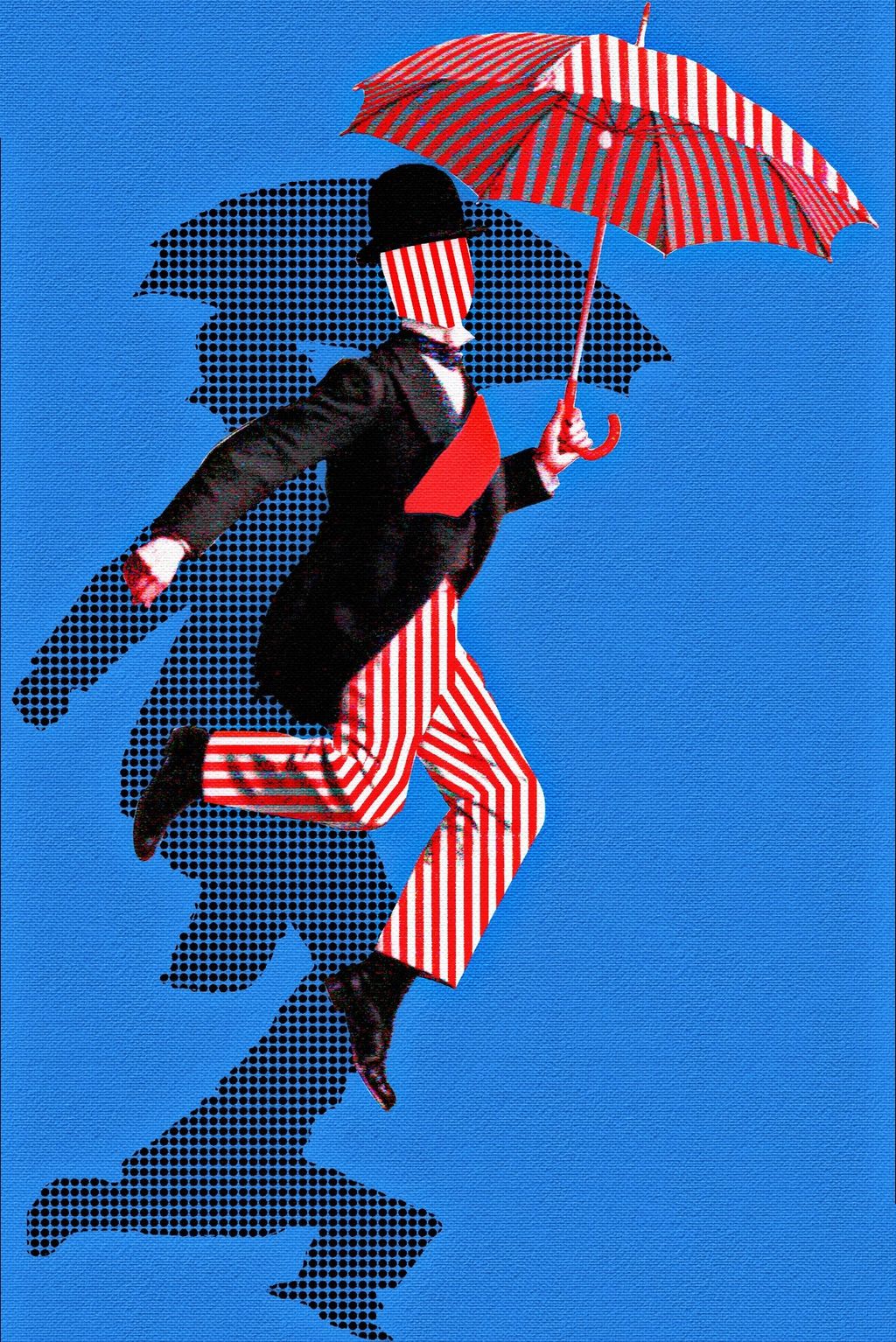
Shades of Blue: The Weight of Appearances
Darbles
1 owner
Base
Long before we learned to carry responsibilities, we learned to carry impressions.
We discovered that a smile could become a shield, that confidence could be tailored like a suit, that elegance could persuade the world we were untouched by storms we had never stopped standing in. Piece by piece, we stitched ourselves into something presentable, hoping that if we looked strong enough, no one would notice where we were breaking.
So we polished our voices.
We straightened our posture.
We held the umbrella higher.
And somewhere along the way, the performance became so convincing that even we forgot where it ended and where we began.
The heaviest things we carry are rarely visible.
Not grief.
Not loneliness.
Not expectation.
But the exhausting distance between who we are and who we believe the world will accept.
Every morning, countless people step into the daylight wearing invisible costumes woven from obligation, reputation, success, beauty, certainty, and strength. They walk gracefully beneath them, even as those garments quietly grow heavier with every passing year.
Perhaps that is why some souls seem tired without ever appearing wounded.
Because appearances do not simply hide us.
Sometimes, they replace us.
And perhaps the greatest freedom a person will ever know is not being admired for the mask they perfected, but being loved by the face they no longer have to hide.
When the world applauds the person you've learned to appear as, would it still recognize the one you had to leave behind?